
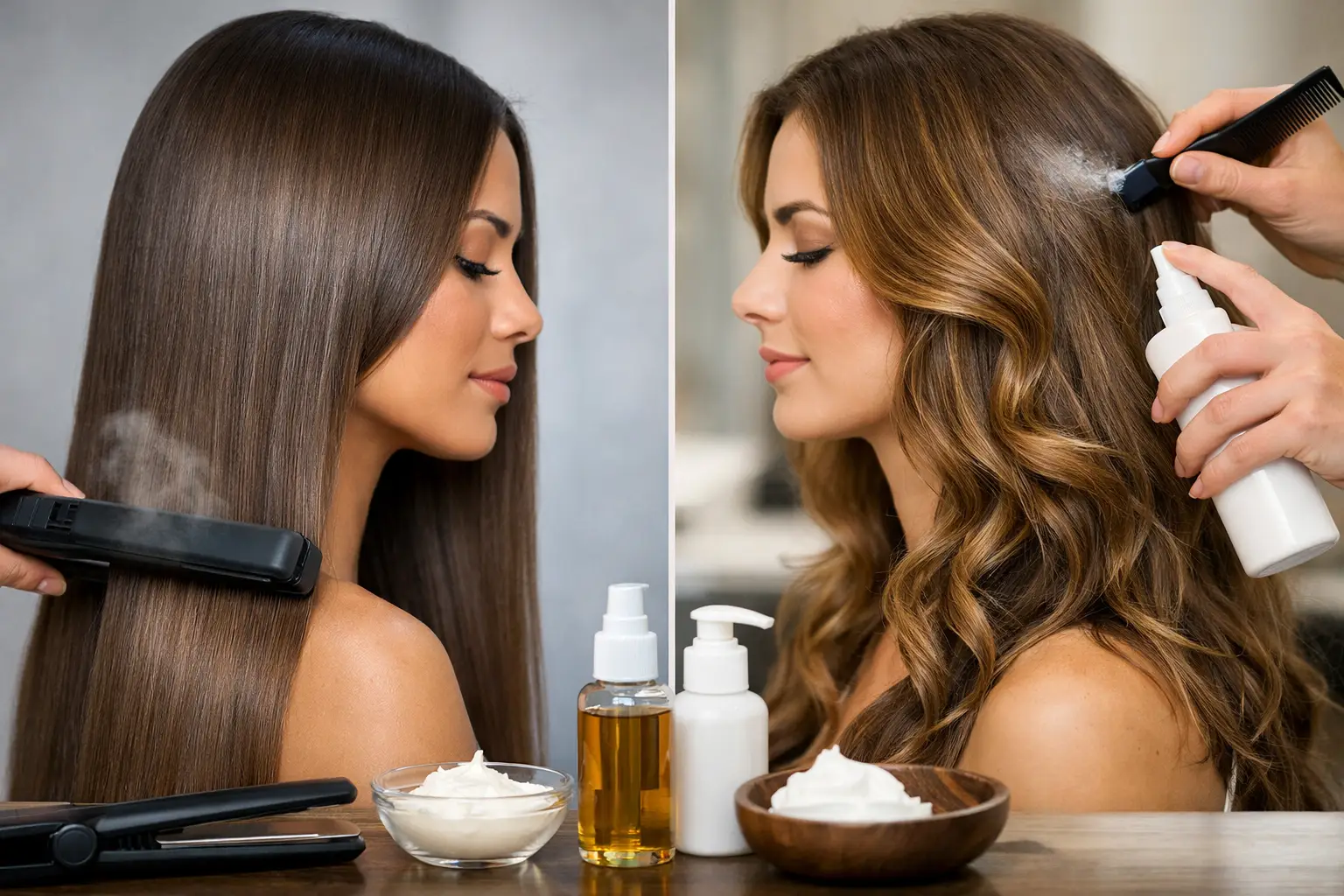
That Scottsdale heat can turn a polished blowout into a humid, frizzy situation before lunch. When you are weighing a brazilian blowout vs keratin treatment, the right choice comes down to more than wanting smoother hair. Your natural texture, color history, styling routine, and comfort with maintenance all matter.
Both services can reduce frizz, add shine, and make day-to-day styling feel easier. They are not interchangeable, though. The formulas, finish, longevity, and care requirements can vary significantly. A thoughtful salon consultation is the best place to begin, especially if your hair is highlighted, fragile, curly, or already chemically treated.
Brazilian Blowout vs Keratin: The Main Difference
A Brazilian Blowout is a specific type of smoothing service designed to create a sleek, glossy, humidity-resistant finish. It typically works by applying a liquid formula to the hair, blow-drying it in, and sealing it with heat. The service is often chosen by clients who want hair to look smoother right away while retaining some natural body and movement.
Keratin treatment is a broader term. Keratin is a protein naturally found in hair, and many smoothing services are marketed as keratin treatments because they use keratin or similar conditioning ingredients. Their formulas and results can differ widely by brand. Some are intended to soften curls and reduce frizz; others aim for a straighter, more dramatic finish.
The practical takeaway is simple: do not choose based on the label alone. Ask what specific formula your stylist uses, what finish it is designed to create, and how it will interact with your current hair condition.
What Each Treatment Can Do for Your Hair
Brazilian Blowout results
A Brazilian Blowout is often associated with instant shine and a smooth, polished look. It can make hair faster to blow-dry, more manageable in humidity, and less prone to surface frizz. For someone with wavy or moderately curly hair who still wants to wear her natural texture from time to time, this can be appealing. The hair may look more refined without appearing completely flat or pin-straight.
Results generally last around 10 to 12 weeks, although your shampoo habits, pool time, heat styling, and hair porosity can affect longevity. Many Brazilian Blowout formulas also allow you to wash or style your hair soon after the appointment, but aftercare should always follow the directions for the exact service performed.
Keratin treatment results
A keratin treatment can deliver anything from softened texture and easier styling to noticeably straighter hair. The final effect depends on the formula, the amount of heat used during the service, your hair’s starting point, and the stylist’s technique. Some clients love keratin treatments because they make thick, coarse, or highly textured hair feel easier to manage without removing every bit of movement.
Keratin treatments often last about three to five months. Some formulas require a waiting period before washing, clipping, tucking, or tying the hair back. Others may offer more flexibility. This is why a clear aftercare conversation matters as much as the treatment itself.
Which Is Better for Frizz, Curls, and Color?
Neither treatment is universally better. The better option is the one that supports the look you want while respecting your hair’s limits.
If your goal is a glossy, low-maintenance refresh that helps you manage frizz without committing to very straight hair, a Brazilian Blowout-style service may suit you well. It is often a favorite for clients who want their blowouts to last longer and their hair to look polished in Arizona’s dry climate and during humid travel.
If you want more substantial smoothing, have thick or coarse hair, or spend considerable time straightening your hair at home, a keratin treatment may be a better fit. The right formula can reduce your styling time and create a softer, sleeker result for months.
Color-treated hair calls for extra care. Highlights, balayage, and lightened hair can be more porous and vulnerable to heat-related stress. A skilled stylist should assess elasticity, breakage, color history, and overall condition before recommending any smoothing service. In some cases, a trim, conditioning plan, or restorative treatment may be the more beautiful choice before moving forward.
Safety Questions Worth Asking Before You Book
A polished result should never come at the expense of feeling comfortable and informed. Smoothing treatments can contain different ingredients, and some formulas may release formaldehyde or related compounds when heated. Ingredient lists, ventilation standards, and manufacturer instructions vary by product.
Before your appointment, ask your salon which formula will be used, whether it contains or may release formaldehyde when heated, and what ventilation practices are in place. Share if you are pregnant, nursing, have asthma or fragrance sensitivities, experience scalp irritation, or have had a prior reaction to a hair service. Your stylist can help you discuss appropriate options, but your health provider is the right resource for personal medical guidance.
A patch test may be appropriate for clients with known sensitivities. It is also wise to postpone a smoothing service if your scalp is irritated, sunburned, or healing from another treatment. Great hair starts with a careful, personalized approach, not a rushed one.
The Maintenance That Protects Your Results
The treatment itself is only part of the investment. At-home care determines how long your smooth finish stays fresh. Your stylist may recommend sulfate-free and sodium chloride-free products, especially when the formula’s instructions call for them. Clarifying shampoos, frequent swimming, and repeated high-heat styling can shorten the life of many smoothing treatments.
Use a heat protectant whenever you blow-dry or use hot tools. Keep hot tools at a temperature appropriate for your hair type rather than turning them to the highest setting by default. If your ends are dry or lightened, a lightweight professional mask or leave-in conditioner can help preserve softness without weighing hair down.
It also helps to set realistic expectations. These services can make your routine easier, but they do not repair split ends or permanently change your natural texture. Regular trims, thoughtful color timing, and consistent home care are what keep treated hair looking healthy between appointments.
How to Choose at Your Consultation
Bring photos of what “smooth” means to you. One person wants her natural curl pattern with less fuzz; another wants to spend half as much time with a flat iron. Those are very different goals, and a photo gives your stylist a useful starting point.
Be honest about your routine, too. Mention whether you color your hair, wear extensions, swim frequently, use dry shampoo often, or rely on daily hot tools. Share every chemical service from the past year, including box color or at-home straightening products. That information helps your stylist recommend the safest timing and treatment approach.
At Hydrate Salon + Day Spa, a personalized consultation can help match your desired finish with a service plan that feels comfortable, realistic, and beautifully tailored to your hair. You should leave understanding not only what your hair will look like that day, but also how to care for it in the weeks ahead.
The best smoothing treatment is the one that lets you spend less time fighting your hair and more time feeling like yourself. Choose the formula, finish, and maintenance level that fit your real life, then give your hair the thoughtful care it deserves.
