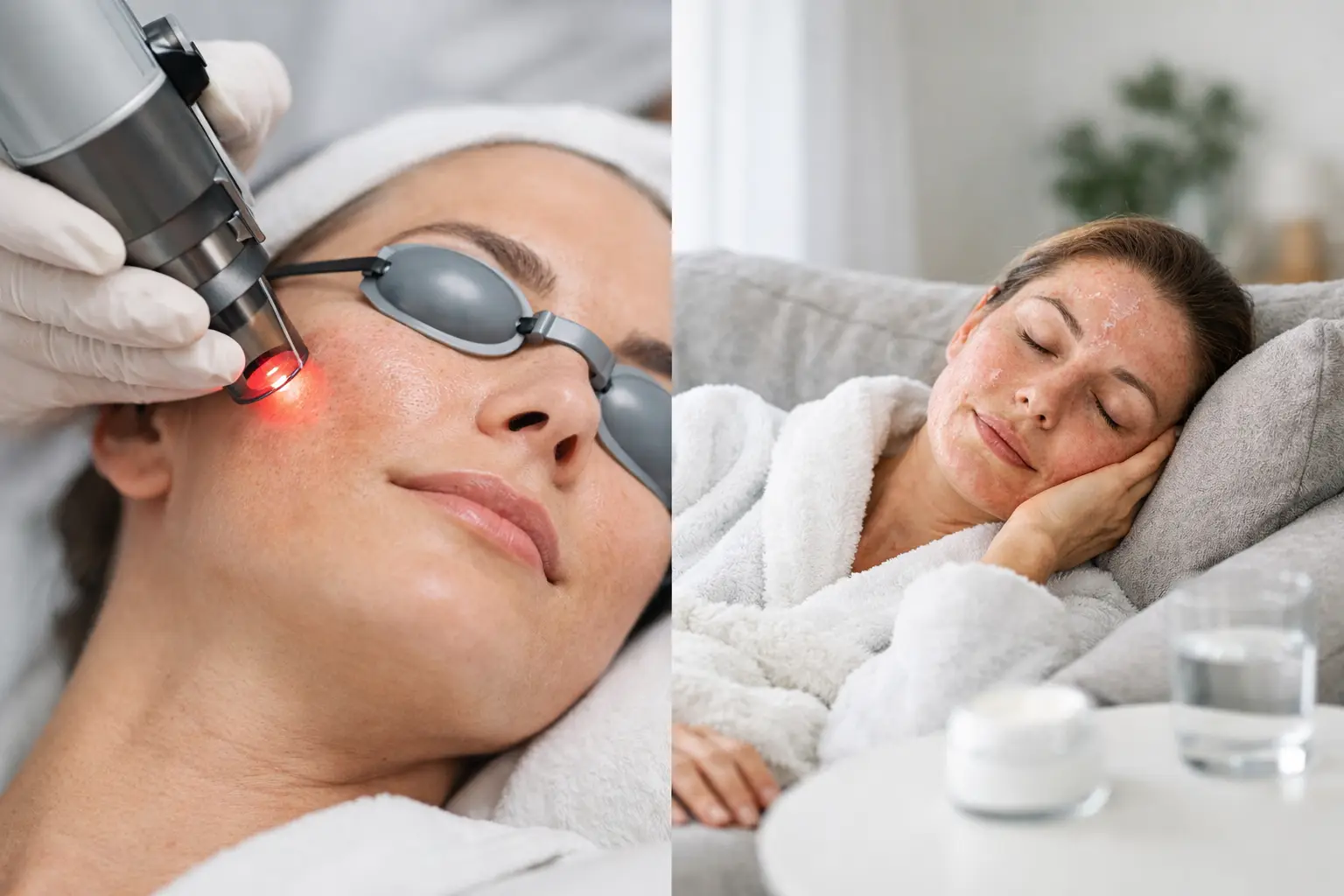
You can plan around redness. You can plan around peeling. What most people want to know before booking is whether laser skin resurfacing downtime will actually fit into real life – work meetings, school drop-offs, dinners out, and the simple question of when your skin will look presentable again.
The honest answer is that downtime depends on the type of laser, the intensity of the treatment, and how your skin responds. Some resurfacing treatments leave you pink for a few days. Others involve a more noticeable recovery window with heat, swelling, bronzing, flaking, and redness that can last longer. If you are considering treatment, it helps to think less in terms of one universal timeline and more in terms of what level of correction you want and what amount of recovery you are comfortable with.
What laser skin resurfacing downtime really means
Downtime is not just the number of days you stay home. It is the stretch of time during which your skin is healing and may look or feel different than usual. That can include redness, swelling, tightness, dryness, rough texture, peeling, or temporary sensitivity to skin care products and sun exposure.
For some clients, downtime means they would rather skip social plans for two or three days. For others, it means taking nearly a week off from events because the skin is visibly shedding or flushed. There is also a second phase to keep in mind. Even after the surface feels better, the skin can remain pink and more reactive than usual for a while.
This is why a consultation matters. A lighter treatment may be easier to fit into a busy week, but it may also require a series for the results you want. A stronger resurfacing session can create more dramatic improvement in texture, fine lines, acne scarring, or sun damage, but the recovery is usually more involved.
How long is laser skin resurfacing downtime?
Ablative and non-ablative lasers do not create the same recovery experience. Fractional treatments also vary based on settings, coverage, and depth. In practical terms, many clients can expect mild to moderate resurfacing to involve a few days of redness and dryness, followed by several more days of flaking or residual pinkness. More intensive treatments can extend that timeline.
A lighter fractional treatment may leave you red and mildly swollen for 24 to 72 hours, with a sandpapery texture and bronzing over the next several days. Makeup is often possible sooner, depending on your provider’s guidance and how intact the skin barrier is. A deeper resurfacing treatment can mean swelling for a few days, active peeling for close to a week, and lingering redness beyond that.
The key point is that social downtime and total healing time are not the same. You may feel comfortable being seen after a few days while your skin is still remodeling and calming down beneath the surface.
A general day-by-day picture
On day one, skin usually feels warm, tight, and looks red, almost like a sunburn. Mild swelling is common, especially around the eyes. By days two and three, that redness can deepen or shift into bronzing as the treated skin begins to dry and darken.
Around days three to five, many people notice roughness, flaking, and a peppery or grid-like texture if a fractional laser was used. This is often the stage that feels the most inconvenient, because your skin may not sit well under makeup and can look uneven before it starts to brighten. By the end of the first week, much of the visible shedding has often passed, though pinkness can linger.
For stronger treatments, that timeline may stretch longer. For gentler sessions, the process may move faster. Your provider should give you instructions based on the exact device and treatment level used.
What affects laser skin resurfacing downtime?
The biggest factor is treatment intensity. More aggressive settings usually mean more collagen stimulation and more visible correction, but also more healing time. The area treated matters too. Full-face resurfacing generally creates more recovery than a smaller spot treatment.
Your skin type, sensitivity, and overall skin health can also change the experience. If your skin barrier is already compromised, very dry, or inflamed, you may feel more reactive afterward. Lifestyle matters more than people expect as well. Heat exposure, exercise too soon after treatment, sun exposure, and picking at peeling skin can all make downtime feel longer.
Aftercare makes a real difference. Gentle cleansing, proper hydration, avoiding active ingredients until your provider says they are safe, and being diligent with sun protection all support a smoother recovery. Good results are not only about the laser itself. They are also about how well the skin is cared for afterward.
How to make downtime easier to manage
If you are trying to fit resurfacing into a busy schedule, timing helps. Many clients book when they have a quieter week or a few days away from major social events. It is smart to avoid scheduling laser treatment right before weddings, vacations, photo sessions, or any occasion where you want your skin to look immediately polished.
At home, keep your routine simple. Use only the products your provider recommends, and resist the urge to exfoliate away flaking skin. That peeling is part of the process. Forcing it can increase irritation and raise the risk of post-treatment marks.
You will also want to plan for strict sun avoidance. Freshly resurfaced skin is more vulnerable to UV damage, and even a short amount of sun can interfere with healing and compromise your results. Hats, shade, and a provider-approved sunscreen are part of the treatment process, not an optional extra.
When can you wear makeup again?
This depends on how intensive the treatment was and whether the skin is still open or actively peeling. With lighter resurfacing, some clients can return to mineral makeup within a couple of days. With deeper treatments, you may need to wait longer. The safest rule is simple: do not guess. Follow your provider’s guidance exactly, because applying makeup too early can irritate healing skin.
What is normal during recovery and what is not?
Redness, warmth, mild swelling, dryness, tightness, bronzing, and flaking are all common parts of laser resurfacing recovery. Temporary sensitivity is common too. Your skin may feel more reactive to products that never used to bother you.
What is not something to brush off is severe swelling, increasing pain, oozing, signs of infection, or anything that feels like it is getting worse instead of better. A good provider should tell you what to expect and when to check in. Reassurance is part of quality care, especially with treatments that ask your skin to do real repair work.
Is laser skin resurfacing downtime worth it?
For many people, yes – especially when concerns like uneven texture, fine lines, enlarged pores, acne scarring, and sun damage are starting to affect how they feel without makeup. Laser resurfacing can deliver meaningful improvement because it works beyond the surface. That said, the best treatment is not always the strongest one. It is the one that fits your skin goals, your calendar, and your comfort level with healing.
That is where a personalized plan matters. Some clients are happy to accept more downtime for a more dramatic reset. Others would rather choose a gentler series that lets them stay more social and polished throughout the process. Neither approach is wrong. It depends on your priorities.
At Hydrate Salon + Day Spa, that balance between results and comfort is part of the conversation. The right treatment should leave you feeling informed, cared for, and confident about what comes next.
Choosing the right timing for treatment
If you have an event on the calendar, work backward rather than squeezing treatment into the last possible opening. Give your skin room not just to peel, but to settle. Even when the obvious flaking is gone, a little residual pinkness can remain, especially in fair or sensitive skin.
Many clients find that fall and winter are convenient seasons for resurfacing because there is less intense sun exposure and fewer long outdoor days. But any time of year can work if you are committed to aftercare. The better question is whether you can give your skin a proper recovery window.
Beautiful results rarely come from rushing. When you know what laser skin resurfacing downtime actually looks like, it becomes easier to choose a treatment plan that feels realistic, refined, and fully worth it.
