
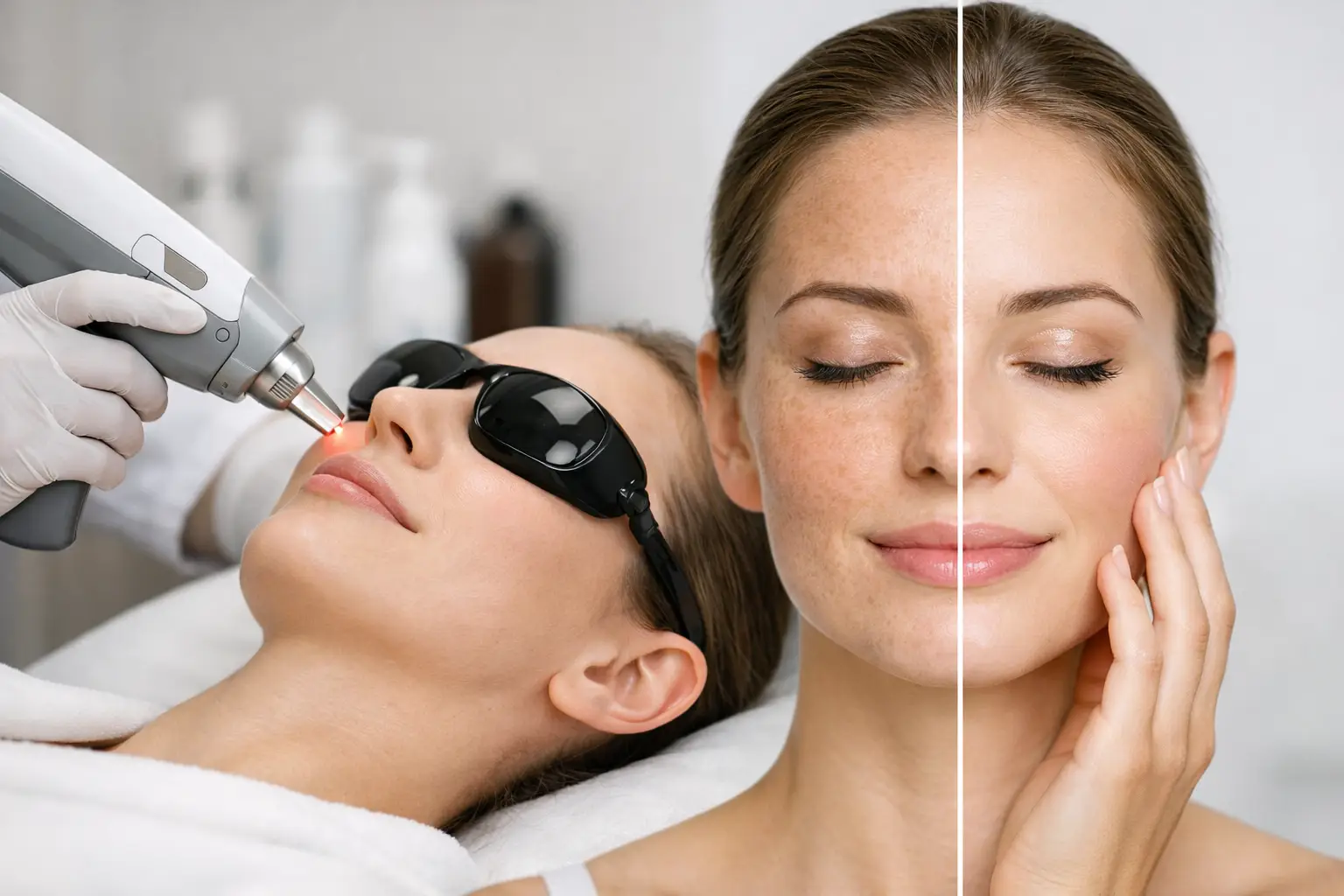
Brown spots can make otherwise healthy, well-cared-for skin look uneven – especially when makeup seems to settle around them rather than cover them. Laser pigmentation treatment results can be remarkably rewarding, but the best outcomes are not about erasing every mark overnight. They come from choosing the right treatment for the type of pigment in your skin, allowing time for the skin to respond, and protecting your refreshed complexion afterward.
For clients who want a brighter, more even look without disrupting a polished routine, laser treatment can be a meaningful part of a long-term skin plan. The goal is clear, natural-looking skin that still looks like you – simply more refreshed.
What laser treatment can improve
Laser pigmentation treatments use targeted energy to break up excess melanin, the pigment responsible for many brown spots and uneven areas of color. Once that pigment is disrupted, your body gradually clears it away. The process can improve the appearance of sun spots, age spots, freckles, certain post-acne marks, and scattered areas of uneven tone.
Results depend on what is causing the discoloration. A sharply defined sun spot often responds differently than melasma, which is a hormonally influenced and heat-sensitive form of pigmentation. Post-inflammatory hyperpigmentation from a blemish or irritation may also need a different approach, especially in deeper skin tones.
That distinction matters. A thoughtful consultation should look beyond the word “pigmentation” and identify whether laser treatment is appropriate, which technology and settings suit your skin, and whether complementary skincare or another treatment may provide a better path forward.
Laser pigmentation treatment results: a realistic timeline
One of the most satisfying early signs after treatment is that treated brown spots may temporarily appear darker. This is often expected. The laser has brought pigment closer to the surface, where it can gradually flake away or fade as the skin renews itself.
For isolated sun spots, visible improvement may begin within one to two weeks. Spots can look peppered, darker, or slightly crusted before they lighten. It is tempting to pick at them, but leaving the skin alone is essential for an even recovery.
More widespread discoloration usually improves more gradually. Many clients notice a brighter overall appearance after a series of treatments, with continuing refinement over several weeks. A treatment plan may include spacing appointments several weeks apart so the skin has time to recover and respond.
The number of sessions is not one-size-fits-all. A few distinct sun spots may improve in a single appointment, while diffuse sun damage or recurring pigment may need several treatments and ongoing maintenance. An honest plan should feel tailored to your skin, your schedule, and the amount of correction you want to see.
What “good” results look like
The most natural-looking laser results tend to be gradual. Rather than looking obviously treated, skin appears clearer, more even, and easier to maintain with less makeup. Brown spots soften or disappear, and the complexion can reflect light more evenly.
It is also realistic to expect some pigment to remain. Skin has memory, and sun exposure, hormones, inflammation, and genetics all influence how pigment behaves. A successful result is not always perfectly blank skin. It is often a noticeable reduction in discoloration combined with a plan to help protect the improvement.
The factors that shape your outcome
Treatment quality matters, but so does what happens before and after your appointment. Your provider will consider your skin tone, pigment depth, current skincare routine, medical history, and recent sun exposure before recommending a service.
Sun exposure is especially relevant in Scottsdale and Phoenix, where intense sunshine is part of everyday life for much of the year. Even brief, repeated exposure can reactivate pigment or make a treatment area more sensitive. Avoiding unnecessary sun before treatment and wearing broad-spectrum SPF consistently afterward helps preserve results.
Your at-home products matter, too. Retinoids, exfoliating acids, benzoyl peroxide, and certain prescription products may need to be paused before treatment, depending on your provider’s instructions. Afterward, gentle cleansing, hydration, and sun protection usually support a comfortable recovery. Your provider can tell you exactly when to resume active products.
Skin tone and pigment type also influence treatment selection. The wrong energy setting or an overly aggressive approach can increase the risk of post-treatment darkening, particularly for clients prone to hyperpigmentation. This is why a personalized assessment and experienced laser provider are more valuable than a bargain appointment built around a single device or a rushed protocol.
What recovery feels like
Downtime varies by treatment type and intensity. Some laser pigment services leave skin pink, warm, or mildly swollen for a few hours to a couple of days. Treatments that target more visible spots may create temporary darkening and light flaking for about a week.
Most clients can return to normal activities quickly, though a little planning helps. Schedule treatment away from a major event if possible, particularly if you are treating a noticeable area of the face, chest, or hands. Skip hot yoga, saunas, intense workouts, and hot showers for the period your provider recommends, as heat can increase redness and may aggravate pigment-prone skin.
During recovery, keep the routine simple. Do not scrub, exfoliate, or try to speed up flaking. A gentle moisturizer and diligent SPF allow the skin to do its work without added irritation.
When laser is not the whole answer
Laser treatment is powerful, but it is not automatically the best first option for every brown patch. Melasma, for example, can be stubborn and may worsen when treated too aggressively or when exposed to heat and sunlight. In these cases, your provider may recommend a more conservative strategy that combines specialized skincare, targeted in-office treatments, and consistent sun protection.
Likewise, pigment caused by active acne may continue to develop until breakouts are under control. Treating the source alongside the marks creates a more satisfying long-term result. Sometimes the most effective plan blends laser services with facials, chemical peels, or professional skincare rather than relying on one treatment alone.
The trade-off is patience. A carefully paced plan may take longer than an aggressive approach, but it can be safer for your skin and more likely to produce an even, confident-looking finish.
How to prepare for a productive consultation
Come ready to share what you have noticed: when the pigmentation appeared, whether it changes with sun exposure or hormones, and which products or treatments you have already tried. If you have an upcoming event, mention that as well. It helps your provider recommend a realistic treatment timeline.
You should also ask what kind of pigment is being treated, how many sessions may be appropriate, what recovery to expect, and how you can maintain the result. A trusted provider will welcome those questions and set clear expectations instead of promising flawless skin in one visit.
At Hydrate Salon + Day Spa, the experience should feel both elevated and approachable: advanced skin expertise, thoughtful guidance, and a plan that fits the way you want to look and feel. The right laser treatment is not about chasing someone else’s complexion. It is about helping your own skin look clearer, brighter, and beautifully cared for.
Your best next step is a personalized skin consultation. When the plan matches your pigment, skin tone, and lifestyle, each treatment can move you closer to the refreshed, even-toned skin you feel confident showing off.
