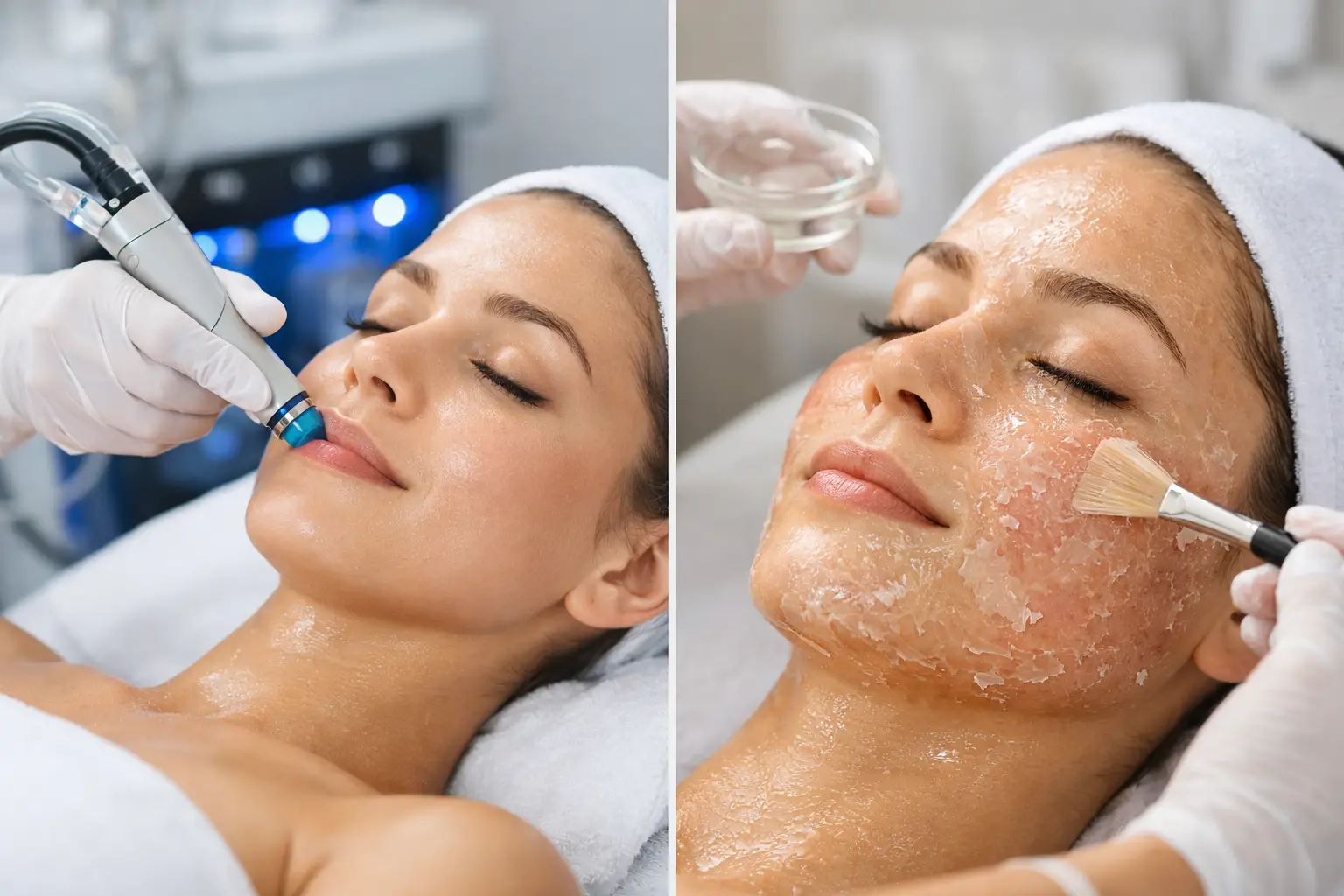
A last-minute event, a week of dry desert air, or a complexion that suddenly looks more tired than you feel can make skincare choices feel urgent. In the HydraFacial vs chemical peel conversation, the better option is not always the stronger one. It is the treatment that matches your skin’s current needs, your comfort level, and the amount of downtime you can realistically allow.
Both services can brighten, smooth, and refresh the complexion, but they work in very different ways. A HydraFacial focuses on cleansing, exfoliating, extracting, and infusing the skin with hydration in one comfortable appointment. A chemical peel uses carefully selected acids to encourage skin cell turnover and address concerns such as uneven tone, texture, acne, and visible signs of aging.
HydraFacial vs Chemical Peel: The Core Difference
A HydraFacial is a noninvasive, multi-step facial treatment. It uses a specialized device to cleanse and exfoliate the skin, remove congestion from pores, and deliver targeted hydrating serums. Most clients leave with skin that looks immediately cleaner, plumper, and more luminous, with little to no visible recovery time.
A chemical peel is a controlled exfoliating treatment. Depending on the formula and strength, it can work at a superficial, medium, or deeper level of the skin. The peel solution loosens damaged surface cells and supports a more even, renewed-looking complexion as the skin sheds and repairs itself.
Think of a HydraFacial as a polished reset before a busy week, dinner, trip, or special occasion. A chemical peel is more of a corrective strategy, especially when you are ready to prioritize concerns that may need a little more recovery time to improve.
When a HydraFacial May Be the Better Choice
HydraFacial treatments are especially appealing when your skin feels dull, dehydrated, congested, or simply in need of a visible refresh. They are a favorite for clients who want results without planning their calendar around peeling or redness.
Because the treatment includes gentle extraction and hydration, it can be an excellent option for skin that is oily in some areas but dry or dehydrated in others. It also works well as part of consistent skin maintenance. Monthly or seasonal facials can help keep pores clearer, improve surface smoothness, and support a healthy glow between more targeted treatments.
A HydraFacial may be right for you if you want to:
- Refresh your skin with no meaningful social downtime
- Hydrate dry, tight, or lackluster skin
- Clear surface congestion and visible blackheads
- Create a smoother canvas before makeup or an event
- Maintain results from a thoughtful professional skincare routine
That said, a HydraFacial is not designed to create the same level of resurfacing as a stronger peel. It can make a meaningful difference in radiance and hydration, but deeper acne scarring, stubborn melasma, and more pronounced texture often require a more corrective plan.
When a Chemical Peel May Be the Better Choice
Chemical peels are often chosen when a client has a specific skin concern that persists despite good home care. Superficial peels can gently target dullness, mild discoloration, and clogged pores. Medium-depth options may be considered for more noticeable sun damage, acne marks, uneven texture, or fine lines, depending on your skin type and treatment plan.
The results from a peel tend to develop over time. You may see some initial brightness, but the more visible change happens as the skin goes through its renewal process. Light flaking may occur with a gentle peel, while stronger formulations can bring more redness, tightness, and peeling for several days.
A chemical peel may be a better fit if your priority is improving uneven pigmentation, recurring breakouts, post-acne marks, rough texture, or early signs of photoaging. It can also be a smart choice in a series, where each treatment builds on the progress of the one before it.
The trade-off is timing. A peel is rarely the treatment to book the day before a major event, especially if you have never had that type of peel before. Skin can react differently from person to person, and even a light peel deserves careful aftercare and daily sun protection.
Results, Downtime, and Comfort Compared
The clearest difference between HydraFacial and chemical peel treatments is the recovery experience. A HydraFacial generally feels comfortable and leaves the skin looking fresh right away. Some clients experience mild pinkness, especially after extraction, but this typically fades quickly. Makeup can often be applied later that day, though letting your newly refreshed skin breathe is always a lovely option.
With a chemical peel, the level of downtime depends on the peel. A light peel may cause a little dryness or flaking for a few days. A more active peel can lead to visible peeling, temporary redness, and sensitivity that requires a gentler routine while the skin recovers. You should never pick or pull peeling skin, even when it is tempting. Allowing the process to happen naturally helps protect your results.
Comfort matters, too. HydraFacial treatments are typically relaxing, with a light suction sensation and cooling hydration steps. Chemical peels can create tingling, warmth, or a brief stinging sensation during application. A professional provider will select an appropriate formula and monitor your skin throughout the service.
Your Skin Concerns Matter More Than the Trend
It is easy to assume that a chemical peel is automatically better because it sounds more intensive. But more intensive does not always mean more appropriate. Skin that is irritated, overly dry, sensitized from retinol, or recovering from too much sun exposure may benefit more from hydration and barrier support than additional exfoliation.
On the other hand, a HydraFacial alone may not fully address stubborn discoloration, recurring acne, or uneven texture that has been present for years. In these cases, a customized series of peels, often paired with professional home care, may deliver a more meaningful improvement.
Your provider should consider your skin tone, sensitivity, acne history, melasma risk, current products, medications, recent sun exposure, and upcoming plans. This is particularly important if you use prescription acne products, retinoids, or have a history of cold sores, hyperpigmentation, or skin sensitivity.
Can You Alternate HydraFacials and Chemical Peels?
For many clients, the answer is yes, with professional guidance. HydraFacials and chemical peels do not have to compete for a permanent spot in your routine. They can serve different roles at different times of the year.
For example, a client may choose a HydraFacial before a vacation or event for immediate hydration and glow, then schedule a peel series later when she has time for recovery. Others may alternate treatments to maintain clear pores and hydration while steadily working on texture or discoloration.
The schedule should be tailored rather than copied from someone else’s skincare calendar. Too much exfoliation can compromise the skin barrier, causing dryness, irritation, and inflammation that work against your goals. A well-paced treatment plan leaves room for the skin to respond, recover, and look its best.
How to Prepare and Care for Your Skin
Before either service, share your complete skincare routine and any medications or recent aesthetic treatments with your provider. You may be asked to pause certain active ingredients, such as retinoids or exfoliating acids, before a peel. Arrive without self-tanning products and be honest about recent sun exposure.
After a HydraFacial, keep your routine gentle and use sunscreen daily. After a chemical peel, follow the aftercare instructions closely. Focus on hydration, avoid additional exfoliation, limit heat exposure when advised, and protect the skin from the Arizona sun. Sunscreen is not an optional finishing step after a peel. It is essential to preserving a more even-looking result.
At Hydrate Salon + Day Spa, a personalized skin consultation can take the guesswork out of choosing between a quick glow and a more corrective renewal plan. The most satisfying treatment is the one that leaves you feeling cared for, confident, and comfortable in your own skin – whether that means a radiant HydraFacial this week or a thoughtfully timed chemical peel when your goals call for more.
