
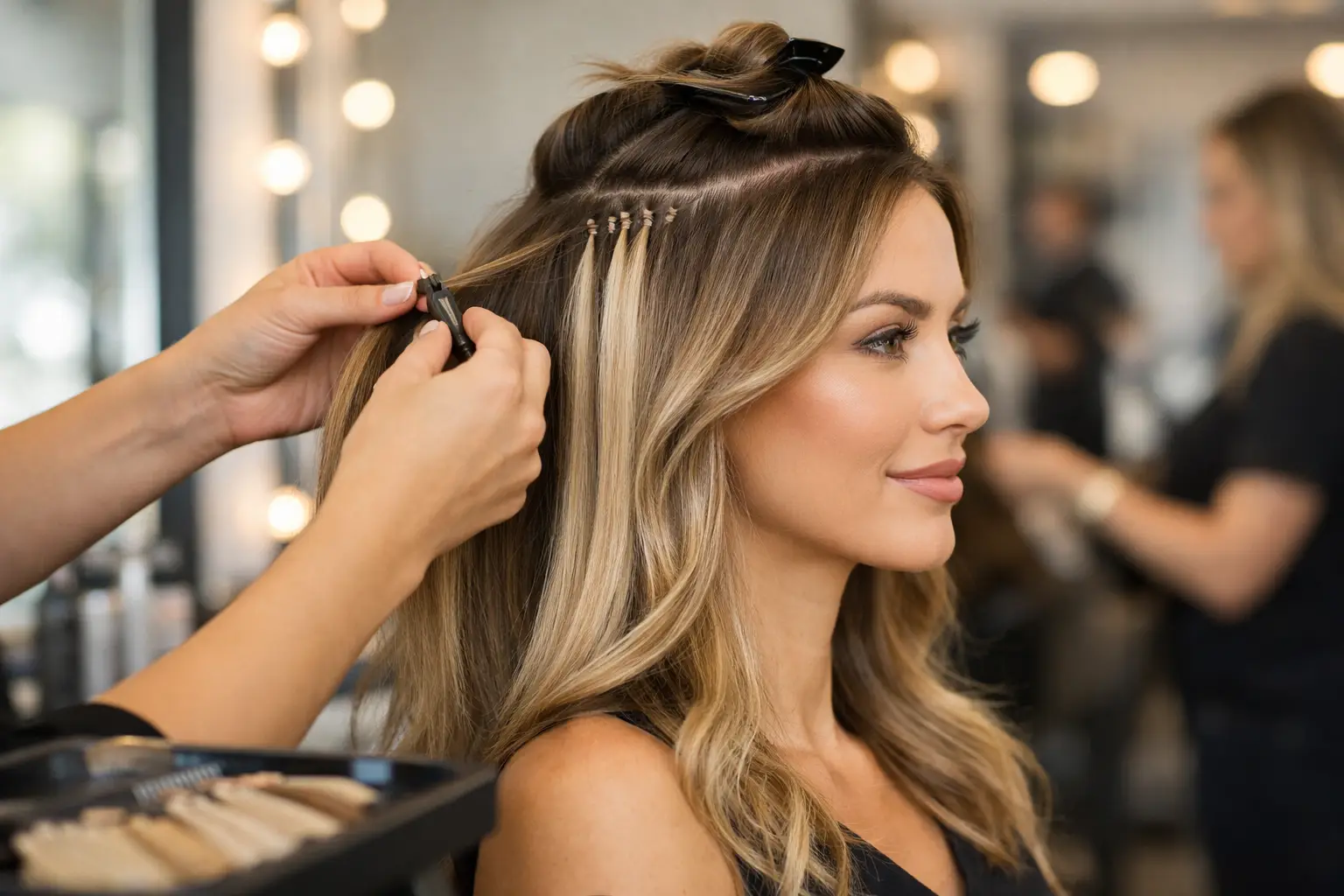
The right extensions should make people notice your hair, not the attachment points. When clients ask how to choose salon extensions, the best answer starts with the look they want to wear every day: fuller hair, added length, a richer color dimension, or a combination of all three. The method matters, but so do your natural hair density, lifestyle, styling habits, and willingness to maintain your investment.
Extensions can be beautifully subtle or noticeably glamorous. A thoughtful consultation helps ensure they feel comfortable, blend naturally, and support the confidence you want from your salon visit.
Start With Your Hair Goals
Be specific about what you would like to change. If your hair feels fine around the ends but you love its current length, a smaller amount of extension hair may create the fullness you are missing. If you are growing out a shorter cut, length may be the priority. If you want brighter pieces without repeatedly lightening your own hair, extensions can add dimension while giving your natural hair a break from chemical processing.
Bring a few inspiration photos, but use them as a starting point rather than a fixed promise. A photo may show hair that has been curled, heavily layered, or styled with multiple rows of extensions. Your stylist can translate the feeling of that image into a plan that works with your hair and face shape.
It also helps to consider how you actually wear your hair. Someone who lives in a loose ponytail, works out most mornings, or prefers a quick blow-dry needs a different approach than someone who enjoys polished waves and regular salon styling. The most flattering extension choice is one that fits comfortably into your real routine.
How to Choose Salon Extensions by Method
There is no single best extension method for everyone. A professional stylist should recommend the right option after assessing your hair, scalp, color, and goals.
Tape-in extensions
Tape-ins are lightweight wefts attached in small, sandwiched sections of natural hair. They are a popular choice for adding fullness and moderate length with a smooth, natural finish. Because they lie flat, they can be especially appealing for clients with finer hair who want a discreet result.
They generally need to be moved up as your hair grows, often every six to eight weeks. They are not ideal for every hairline, and using heavy conditioner or oil near the tabs can affect their hold. Still, for the right client, tape-ins offer a refined result with relatively efficient installation appointments.
Hand-tied or beaded weft extensions
Hand-tied and other beaded-weft methods use a row of beads and thread to support extension wefts. They can create substantial fullness and length while allowing the stylist to customize placement, density, and blend.
This option can be an excellent fit for clients who want a more transformative result. It does require consistent maintenance, careful at-home brushing, and a commitment to proper drying. If you have a very active lifestyle or tend to wear tight updos frequently, your stylist will help you decide whether the row placement and upkeep feel practical.
Keratin bond extensions
Keratin bond extensions are applied in small individual sections, making them highly customizable. They can move naturally with the hair and work well when the goal is a soft, detailed blend around layers or throughout the head.
The installation process takes longer than many weft options, and removal must be performed carefully by a trained professional. They may suit clients who value flexibility in styling and are comfortable with a more detailed service and maintenance plan.
Clip-ins and temporary options
Temporary extensions can be useful for special events, occasional fullness, or trying a new look before committing to a semi-permanent method. Quality matters here, too. A poor color match or bulky placement can make even beautiful hair look less believable.
For day-to-day wear, temporary pieces require practice. If you want consistent results without the daily application, a salon-installed method may be a better fit.
Choose Hair Quality You Can Style With Confidence
The hair itself has a major influence on how extensions look, feel, and last. Human hair extensions generally offer the most natural movement and can be heat-styled like your own hair. Higher-quality hair is less likely to tangle, appear overly shiny, or lose its finish quickly with proper care.
Your stylist may discuss factors such as cuticle alignment, texture, and longevity. The goal is not simply to choose the most expensive option. It is to choose hair that can hold up to your normal styling habits and deliver the polished result you expect.
Texture deserves just as much attention as length. Straight extensions may look beautiful on naturally straight hair, but they can create extra work for someone with a bend, wave, or curl pattern. Matching texture helps the extensions blend when your hair is air-dried, blown out, or styled more casually.
Prioritize a Precise Color and Density Match
A natural extension result rarely comes from one solid shade. Most hair has variation at the root, through the mid-lengths, and around the face. Your stylist may blend two or more shades to recreate that depth, especially if you wear highlights, balayage, or a lived-in brunette color.
The right color match should work in natural daylight, not only under salon lighting. It should also blend through the ends, where a contrast between your natural hair and the extension hair is easiest to spot.
Density is equally personal. Adding too much hair can feel heavy, pull at fragile strands, or create a shape that does not match your natural hair. Too little hair may not provide enough coverage for the length you chose. A skilled extension plan balances the amount of hair with your own density so the result looks full, not forced.
Be Honest About Maintenance Before You Commit
Extensions are a service commitment, not a one-time appointment. They need gentle brushing, thoughtful washing, regular move-up visits, and professional removal when appropriate. Skipping maintenance can lead to tangling, matting, breakage, or unnecessary stress on your natural hair.
Expect to use a brush designed for extensions and to brush from the ends upward while supporting the hair near the attachment area. Brush before showering, before bed, and after activities that cause tangling. Sleep with hair dry and loosely secured if recommended by your stylist.
Product placement matters. Conditioner, masks, and oils belong mostly on the mid-lengths and ends, not directly on tabs, beads, or bonds. Heat protectant is essential if you blow-dry or use hot tools. Most extension methods should not be left damp at the roots, as moisture can affect the attachment area and create tangling.
Budget for the full experience: installation, the extension hair, move-up appointments, removal or reinstallation, and recommended home care. A lower initial price is not always the better value if the hair quality, application, or maintenance support falls short.
Protect the Health of Your Natural Hair
The right extensions should not feel painful, constantly tight, or difficult to sleep in after the initial adjustment period. Mild awareness in the first day or two can happen, but persistent discomfort is a reason to contact your salon. Extensions should be applied with appropriate tension and should never be used to disguise active scalp irritation, significant shedding, or severely compromised hair.
Share your hair history during your consultation. Mention recent lightening, chemical services, postpartum shedding, medication-related changes, scalp sensitivity, or previous extension concerns. This helps your stylist make a responsible recommendation. Sometimes the best next step is a strengthening plan, a haircut to refresh damaged ends, or a temporary option while your hair recovers.
What to Expect at an Extension Consultation
A quality consultation is where the most important decisions happen. Your stylist should examine your hair, ask about your routine, discuss your desired look, explain realistic maintenance, and provide clear pricing before the service is booked.
Use the appointment to ask practical questions. How often will I return for maintenance? Can I wear my hair up? Which products should I avoid? What should I do after swimming or a workout? How long should this hair last with proper care? Clear answers build trust and help you choose confidently.
At Hydrate Salon + Day Spa, extension planning is approached as part of your complete hair look, not as an add-on. Your color, cut, texture, and lifestyle all shape the recommendation, so your finished hair feels polished, comfortable, and distinctly your own.
Beautiful extensions are not about choosing the longest hair or the most dramatic method. They are about choosing a plan you can enjoy wearing – one that supports healthy natural hair, fits your schedule, and lets you leave each appointment feeling refreshed and confident.
