If you have fine or fragile strands, the idea of fuller hair can feel slightly complicated. The right hair extensions for thin hair can add softness, body, and confidence, but the wrong method can make sparse areas more noticeable or put too much tension on hair that already needs a gentle approach.
That is why the conversation should never start with length alone. For thin hair, the real goal is believable fullness, comfortable wear, and a method that respects the health of your natural hair. When extensions are chosen well and applied thoughtfully, they can look polished and effortless. When they are too heavy, too dense, or attached incorrectly, they tend to announce themselves fast.
What makes hair extensions for thin hair different
Thin hair needs a lighter hand. That applies to the amount of added hair, the type of attachment, and even where the extensions are placed. Someone with thick, dense hair can often hide more attachment points and carry more weight without strain. Thin hair usually cannot.
The biggest concern is tension. If extensions pull at the root day after day, they can create discomfort, shedding, and in some cases breakage around the attachment areas. Thin hair also has less natural coverage, so bulky bonds, wide wefts, or poorly matched color can be easier to spot.
This is where customization matters. The best result is rarely the most dramatic one. It is the one that blends with your natural density, supports your styling routine, and feels good enough to wear consistently.
The best options for hair extensions for thin hair
Not every extension method is a good fit for fine or low-density hair. Some methods are far more forgiving than others.
Hand-tied or very lightweight wefts
For many women with thin hair, lightweight wefts can be an excellent option when installed by an experienced stylist. They tend to distribute weight more evenly than some other methods, which can make them feel more comfortable. They also work well for clients who want noticeable fullness through the mid-lengths and ends.
The trade-off is that not every thin-haired client is a candidate. If the hair is very sparse at the crown or sides, the rows may be harder to conceal. Placement has to be precise, and the amount of hair added must stay conservative.
Tape-in extensions
Tape-ins are often one of the better-known choices for fine hair because they lie relatively flat. When properly color-matched and placed, they can create soft fullness without looking bulky. They are especially appealing for clients who want a natural finish and do not want to feel a lot of attachment points.
That said, tape-ins are not automatically perfect for everyone with thin hair. If the hair is extremely fragile, overprocessed, or shedding, even flat attachments can be too much. Maintenance also matters. Oils, improper brushing, or pulling them into tight styles too often can shorten wear and affect your natural hair.
Halo extensions
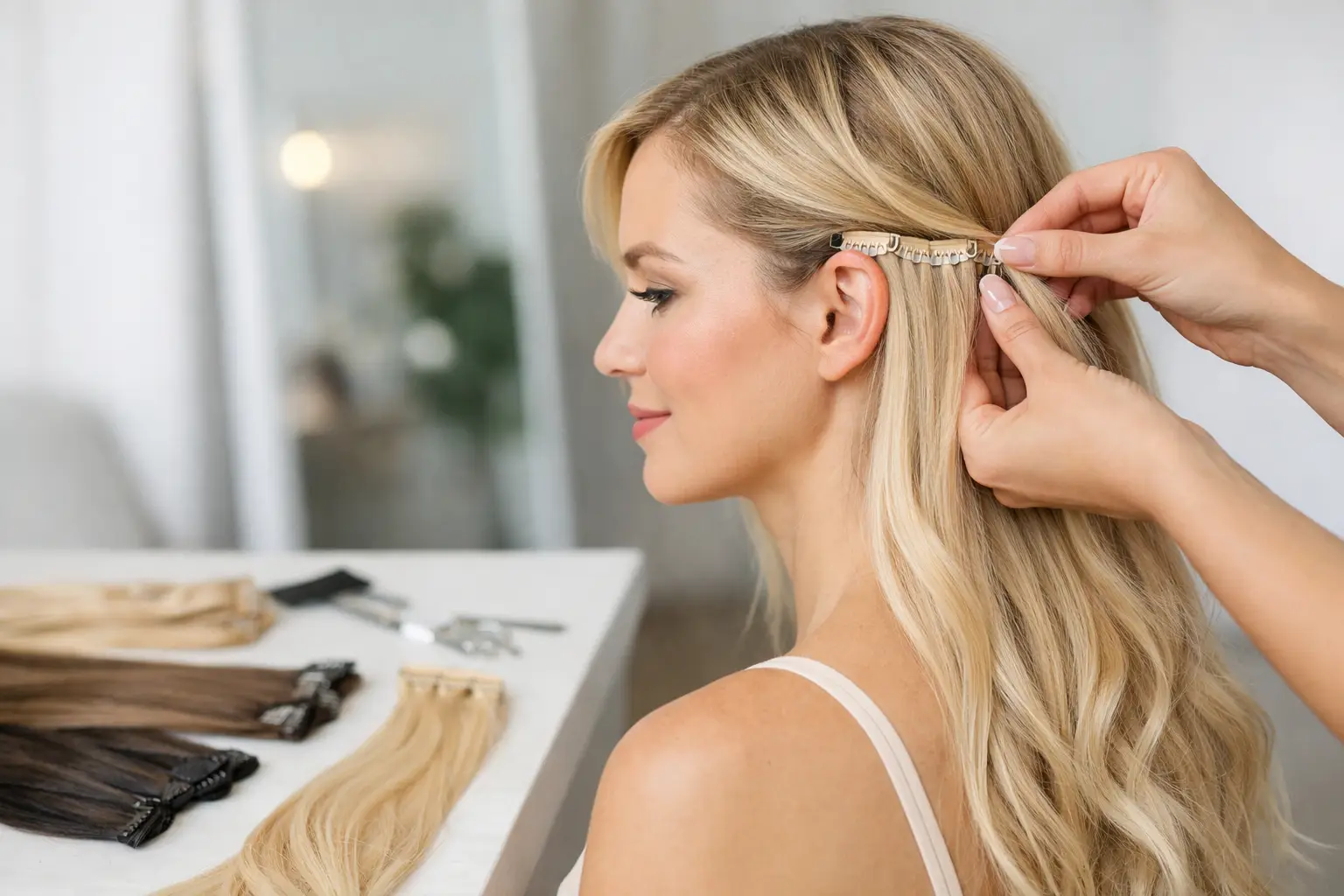
If you want flexibility without commitment, halo extensions are often the gentlest place to start. Because they are not bonded or taped directly to your hair, they offer fullness with less daily strain on delicate strands. They are also ideal for women who only want extra volume for events, photos, dinners, or occasional styling.
The compromise is that halos are not as customizable as professional installed methods. They can be wonderful for part-time wear, but they may not deliver the same tailored, all-day result for every haircut or lifestyle.
Clip-ins for occasional use
Clip-ins can work for thin hair, but they need to be chosen carefully. Lightweight clip-ins used occasionally are usually a better choice than thick, heavy sets marketed for dramatic transformation. For a client with delicate hair, too many clips or too much hair can create pressure and make the top layers separate.
Used sparingly, clip-ins can be a practical option. Used daily on the same sections, they may become too stressful for hair that is already fine.
Methods thin hair should approach carefully
Some extension methods simply require more caution. That does not mean they are never appropriate, but they are not usually the first recommendation for fragile or low-density hair.
Fusion or bonded extensions can create beautiful movement, but they may be too heavy or too concentrated for some thin-haired clients. Individual attachment methods can also become more visible when there is not much natural density to cover them.
Very bulky wefts, oversized clip-in sets, and ultra-long extensions can also cause problems. The longer the extension, the more leverage and weight it creates. On thin hair, that can quickly shift from glamorous to uncomfortable.
How to know which method is right for you
The best extension choice depends on more than whether your hair is thin. Texture, scalp sensitivity, chemical history, haircut, and how often you style your hair all matter.
If your hair is fine but healthy, you may have more options. If it is thin and also highlighted, heat-styled often, or prone to breakage, your stylist may recommend a gentler or more temporary method. If your main concern is a wider part or visible scalp at the crown, extensions alone may not fully solve the issue, and placement becomes even more strategic.
Lifestyle matters too. If you work out often, wear your hair up daily, or want low-maintenance beauty, that should shape the recommendation. Some clients love the polished feel of installed extensions and do not mind regular maintenance. Others prefer the freedom of removable options they can use only when they want them.
A good consultation should feel honest, not sales-driven. Sometimes the best answer is yes, extensions can help. Sometimes it is not yet, not this method, or let us improve the health and shape of your natural hair first.
What natural-looking results actually require
The women whose extensions look the most believable are rarely wearing the most hair. They are wearing the right amount.
For thin hair, subtle density usually looks more expensive than dramatic length. A small increase in fullness around the sides and ends can make your blowout look healthier, your ponytail feel thicker, and your haircut hold its shape better. It should still look like your hair, just refreshed.
Color match is equally important. Thin hair does not forgive harsh contrast. A blended match with lowlights, highlights, or rooted dimension often looks far more natural than a flat, one-tone extension shade. The cut matters too. Extensions should be shaped into your haircut so the ends do not look disconnected.
Care matters as much as application
Even the best hair extensions for thin hair need thoughtful home care. Fine hair tends to tangle more easily around attachment points, especially if you sleep with it damp, brush too aggressively, or skip maintenance visits.
Gentle brushing, soft styling habits, and the right products help preserve both the extensions and your natural hair. Heat protection matters. So does avoiding tight ponytails that pull on the same areas repeatedly. If something feels uncomfortable, that is not something to push through. Extensions should feel secure, but they should not feel like constant tension.
Maintenance appointments are also part of the investment. Thin hair grows out just like every other hair type, but when there is less density to hide grown-out attachments, timing becomes even more important.
When extensions may not be the first step
There are moments when the healthiest choice is to pause. If your hair is actively shedding, your scalp is irritated, or you are seeing significant breakage, the priority should be scalp and hair health first. Extensions can enhance healthy hair beautifully, but they should not be used to cover an issue that needs professional attention.
This is especially true if your thinning is new, sudden, or concentrated in certain areas. A thoughtful stylist will tell you when a service is a great fit and when a different plan makes more sense.
At Hydrate Salon + Day Spa, that kind of personalized guidance matters. Beauty services should feel comfortable, confidence-building, and tailored to your real needs, not based on a one-size-fits-all formula.
The smartest way to start
If you are curious about extensions, start smaller than you think. Ask for fullness before length. Ask what method places the least stress on your natural hair. Ask how the extensions will look when your hair is up, when it is air-dried, and when it is a few weeks into wear.
The right plan should leave you feeling more like yourself, not like you are managing someone else’s hair every day. Thin hair can absolutely wear extensions beautifully, but the best results come from restraint, customization, and a stylist who understands that comfort and hair health are part of the final look.
A fuller style should never cost you peace of mind. When extensions are chosen with care, they do more than add volume – they make getting ready feel easy again.
